
‘Ideas Must Be Countered with Ideas to Build a Naxal-Free India’: Aradhita Singh
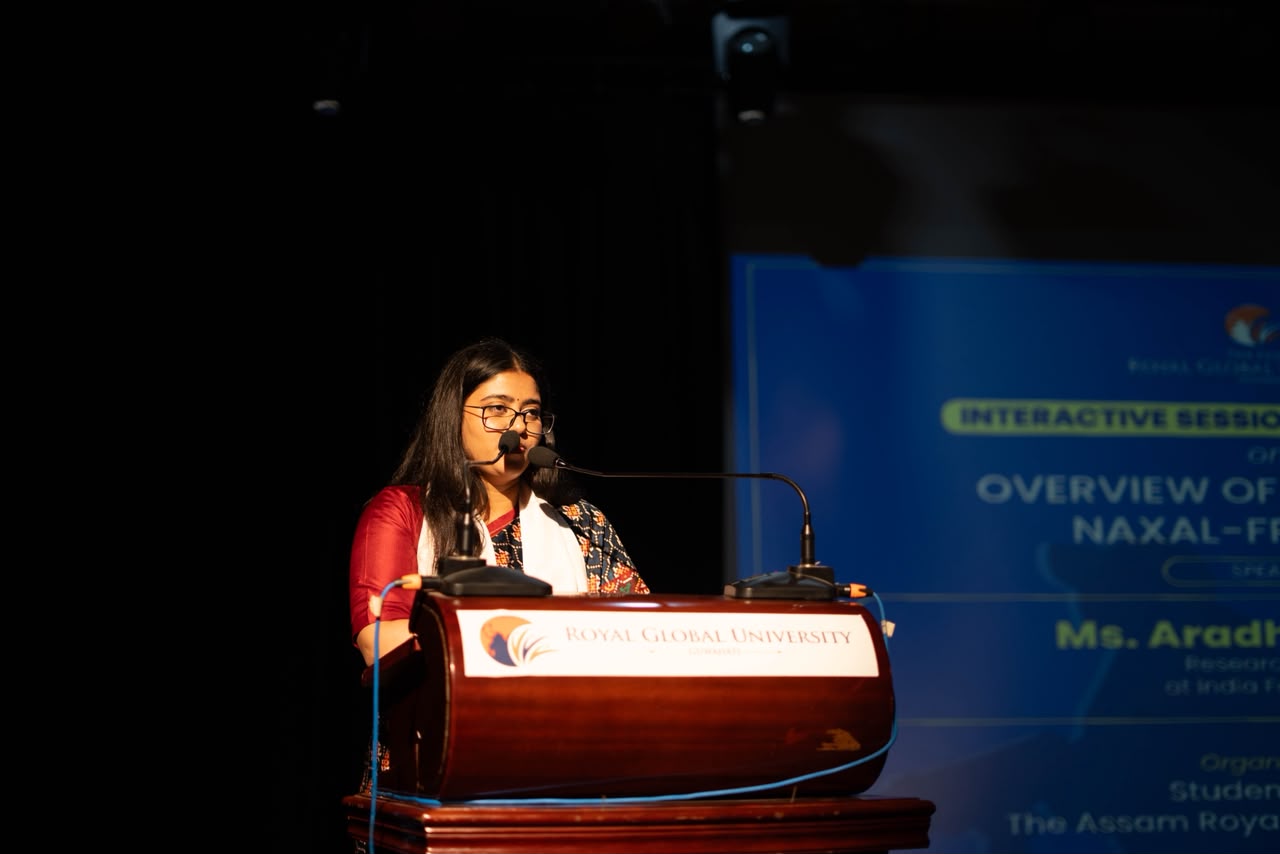
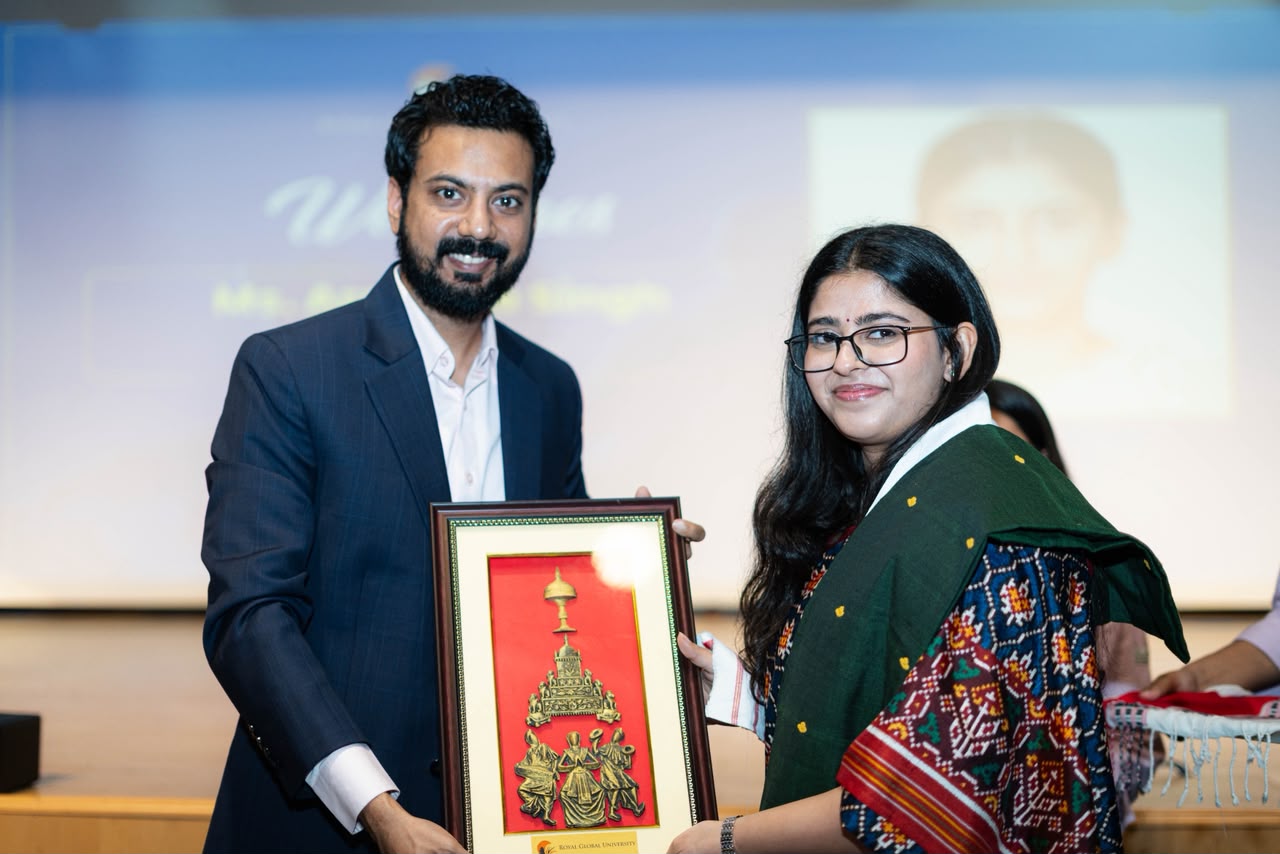
GUWAHATI, September 9, 2026: Ideas often travel faster than arms, and
countering Naxalism therefore requires addressing not only its militant dimensions but also the ideology and
narratives that sustain it, said Aradhita Singh, Research Fellow at India Foundation, New Delhi, at an
interactive session held at The Assam Royal Global University (RGU) today.
Singh, who formerly served in the Office of the Hon’ble Vice President of India, where she worked on
research, strategic communications and parliamentary affairs, was addressing students during a session on
“Overview of Journey to Naxal-Free India.”
Explaining the ideological dimensions of Naxalism, Singh said the movement has historically thrived on
grievances, deprivation and narratives that portray a conflict between people and the State, often
accompanied by the romanticisation of armed rebellion.
During her presentation, she observed that a movement once regarded as one of India’s biggest internal
security challenges had reached its end phase in 2026. She attributed this transformation to the
Government’s sustained efforts to extend the presence of the State into formerly Maoist-affected regions
through infrastructure development, welfare delivery, rehabilitation and administrative outreach.
Singh emphasised that the next phase should focus on rebuilding erstwhile Maoist-affected societies through
development, good governance and active community participation. She stressed that the face of governance in
these regions should gradually shift from a predominantly security-oriented presence to public service
delivery, with institutions such as schools, hospitals, banking facilities and other essential services
becoming more visible and accessible to local communities.
The interactive session witnessed enthusiastic participation from a large number of students. Several
students raised questions on insurgency, extremism, counter-insurgency strategies, governance and the
challenges involved in sustaining peace and development in formerly affected regions. Singh responded to the
queries and engaged with the students on the broader social, political and security dimensions of the issue.